
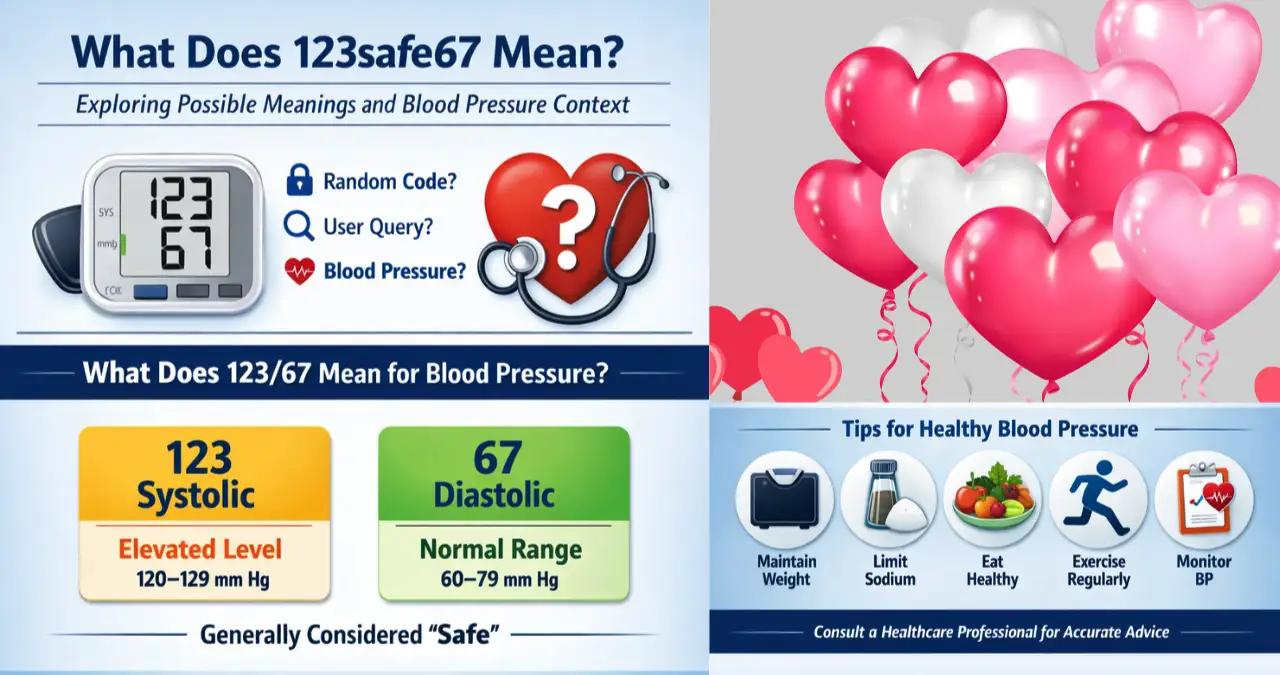
Unusual alphanumeric search terms often raise curiosity, and “123safe67” is one such example. At first glance, it appears to be a random string of numbers and letters. Some online pages treat it as a security code or a system-generated identifier, while others attempt to attach different meanings to it.
One possible interpretation connects the numbers 123/67 with a blood pressure reading and the word “safe” as a question about health. This article explores that possibility carefully—without assuming intent—and explains what a blood pressure reading of 123/67 may indicate under commonly accepted medical guidelines.
Table of Contents
Possible Interpretations of 123safe67
Because the term lacks context, it can be interpreted in more than one way:
- Alphanumeric string: It may simply be a randomly generated code used in URLs, testing environments, or internal systems.
- Search shorthand: Some users type condensed phrases instead of full questions.
- Health-related query (possible): The format “123/67” resembles a blood pressure reading, and “safe” could indicate concern about whether that reading is normal.
Without clear search modifiers, it is not possible to definitively state the user’s intent. However, since health-related interpretations are plausible, it is useful to explain the blood pressure aspect responsibly.
Understanding Blood Pressure Readings
Blood pressure is written as systolic/diastolic:
- Systolic pressure (top number): Pressure in the arteries when the heart beats
- Diastolic pressure (bottom number): Pressure when the heart rests between beats
Measurements are expressed in mm Hg (millimeters of mercury).
Is a Blood Pressure Reading of 123/67 Safe?
According to widely accepted medical guidelines:
- Systolic: 123
Falls in the “elevated” range (120–129) - Diastolic: 67
Falls within the normal range (60–79)
What This Means
A reading of 123/67 is generally not considered dangerous, but it is slightly above the ideal systolic level. It does not indicate hypertension, yet it may signal a higher future risk if lifestyle factors are not managed.
Most health organizations consider below 120/80 to be the optimal blood pressure for adults.
Should You Be Concerned?
For many adults, an occasional reading like 123/67 is not a cause for alarm. However, factors such as:
- Age
- Family history
- Stress levels
- Diet
- Existing medical conditions
can influence how this reading should be interpreted.
Only a qualified healthcare professional can provide personalized medical advice.
Tips for Maintaining Healthy Blood Pressure
If your readings are consistently in the elevated range, the following habits are commonly recommended:
- Maintain a healthy body weight
- Reduce sodium intake
- Eat potassium-rich foods (fruits and vegetables)
- Exercise regularly
- Manage stress and maintain healthy sleep patterns
- Monitor blood pressure consistently, not just once
These are general wellness tips and not a substitute for medical care.
Final Thoughts
The term “123safe67” does not have a universally accepted meaning. While some interpretations link it to blood pressure concerns, others may simply treat it as a random or technical string. Because of this ambiguity, it is important not to draw conclusions without context.
If your interest in the term is related to health, understanding what a 123/67 blood pressure reading represents can be helpful—but medical decisions should always be guided by professional advice rather than search terms alone.
FAQs
Q1. Is 123/67 considered high blood pressure?
No. It is classified as elevated systolic pressure, not high blood pressure (hypertension).
Q2. When should I consult a doctor about blood pressure?
If your readings are consistently above normal, fluctuate significantly, or are accompanied by symptoms such as dizziness or headaches, consult a healthcare professional.